

In a significant victory for workers’ rights in Baltimore, three carpenters have reached a $150,000 settlement with contractors over a wage dispute at the Commodore John Rodgers Elementary/Middle School.
The settlement, reached after mediation in June 2026, resolves a federal lawsuit alleging that the workers were systematically underpaid during the $66 million school renovation project.
The plaintiffs — Arnulfo Cabrera, Elmer Callejas, and Yovani Gutierrez — will receive $135,000 in unpaid wages and an additional $15,000 in incentive awards. Speaking to The Baltimore Sun, their attorney Mark Hanna hailed the outcome as a “cutting-edge case” that demonstrates the necessity of classifying employees correctly by their trade, particularly on publicly funded projects.
The core of the dispute centered around worker “misclassification,” a common tactic used by low-road contractors to avoid paying state-mandated prevailing wages.
The core of the dispute centered around worker “misclassification,” a common tactic used by low-road contractors to avoid paying state-mandated prevailing wages.
The core of the dispute centered around worker “misclassification,” a common tactic used by low-road contractors to avoid paying state-mandated prevailing wages.
Although the three men were performing skilled carpentry work, they were classified and paid by their employer as “common laborers.” The difference in pay was substantial, amounting to over $20 per hour in lost wages and fringe benefits.
“Luckily, the individuals that were working for the company did some pretty good documentation of what they did on a daily basis,” said Eastern Atlantic States Carpenters’ Representative John Barber.
In a Zoom interview earlier this week, Barber explained that the workers took photos of their daily tasks, providing the “ammunition” needed to prove they were doing carpentry work all day, rather than the laborer tasks claimed by their employers.
The settlement is particularly notable because it came through a private lawsuit rather than a public agency. While the Maryland Department of Labor investigates wage complaints, its resources are often limited. This case utilized a private right of action, which Barber notes can be more effective for workers as it allows for the possibility of treble damages.
“We’re really proud that these workers stood up and said, ‘We are carpenters… and we should be paid as carpenters.’ ”
– Attorney Mark Hanna
Speaking to The Baltimore Sun
“We’re really proud that these workers stood up and said, ‘We are carpenters… and we should be paid as carpenters.’ ”
– Attorney Mark Hanna
Speaking to The Baltimore Sun
Barber emphasized that a “race to the bottom” in the construction industry hurts everyone, including legitimate contractors who struggle to compete with “bad actors” who slash costs through wage theft. He observed that many workers are initially afraid to speak up due to their immigration status or fear of retaliation, but in this case, the workers stood their ground.
“We’re really proud that these workers stood up and said, ‘We are carpenters… and we should be paid as carpenters,’ ” attorney Mark Hanna told the The Baltimore Sun.
The settlement effectively serves as a warning to contractors that worker misclassification will not go unchecked in Baltimore. As the city continues to invest in critical infrastructure and schools, the Baltimore City Wage Commission and labor advocates remain vigilant in ensuring that the people building our communities receive every dollar they have earned.
Acknowledging the win, Barber concluded that such settlements provide a “nice chunk of change” that can truly change the lives of the workers involved.
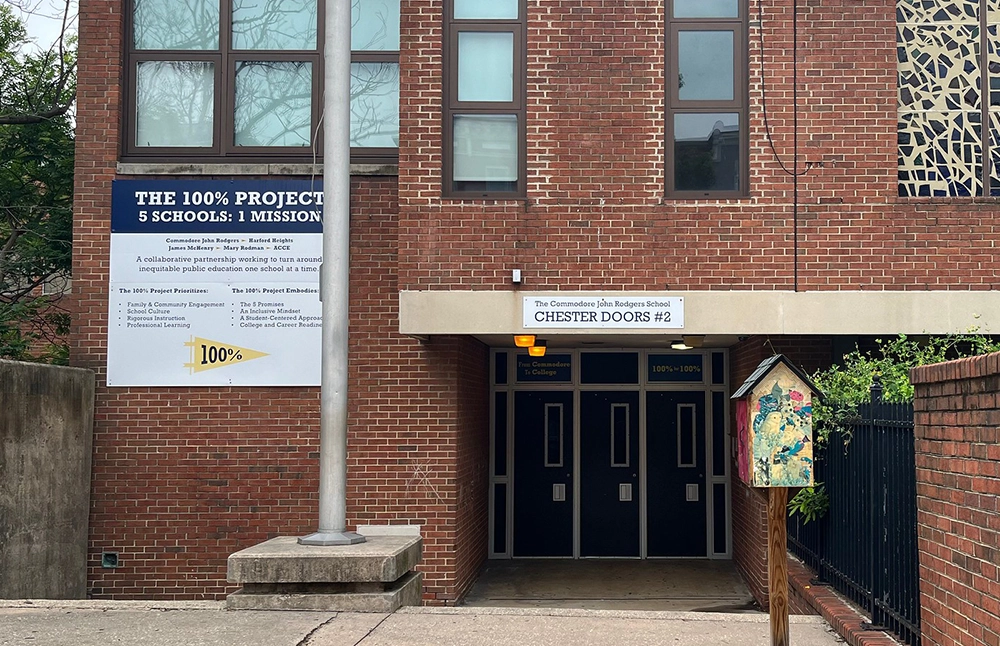
ABOVE: A June 2022 photo shows an entrance to Commodore John Rodgers Elementary/Middle School in Baltimore, before renovations began in October 2024. Photo by Eli Pousson via Baltimore Heritage Flickr. Public domain.