

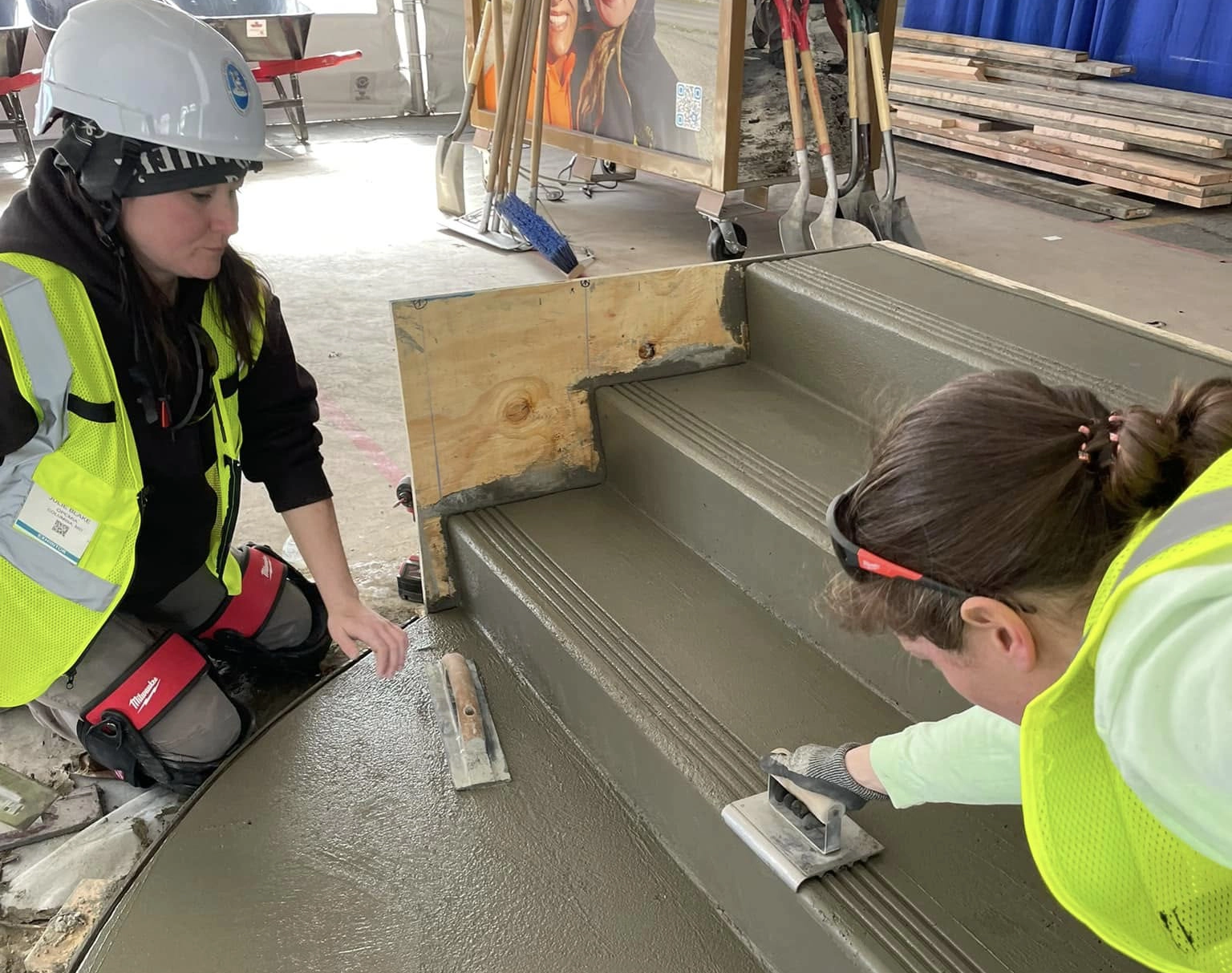
A Maryland House committee voted this afternoon to approve legislation that would require contractors and subcontractors who employ four or more workers on covered prevailing wage public works projects to utilize registered apprentices for at least 20 percent of total work hours.
“Ultimately, the goal is to really invest in and build up our Maryland workforce,” said Delegate Melissa Wells (D–Baltimore City), who is also a sponsor of the bill, while testifying during a February 19, 2026, committee hearing.
During its session today, the House Government, Labor and Elections Committee voted 14-1 to approve House Bill 864, also known as the Maryland Workforce Apprenticeship Utilization Act.
“Ultimately, the goal is to really invest in and build up our Maryland workforce.”
– Maryland Delegate Melissa Wells (D–Baltimore City)
“Ultimately, the goal is to really invest in and build up our Maryland workforce.”
– Maryland Delegate Melissa Wells (D–Baltimore City)
Supporters of the legislation note that Maryland is at a crossroads in its economic development, facing a critical need for skilled tradespeople to complete vital infrastructure projects, from road repairs to the rebuilding of the Francis Scott Key Bridge. To help address this challenge, HB864 has been proposed to ensure that state-funded projects also serve as training grounds for the next generation of construction workers.
“These programs also serve as economic engines that build critical training infrastructure and provide pathways to high-paying careers,” said Del. Wells during the February hearing.
Watch highlights of 2/19/26 testimony in favor of HB864, also known as the Maryland Workforce Apprenticeship Utilization Act.
Creating Career Pipelines for Marylanders
A primary goal of the legislation is to ensure that the state’s massive investments in workforce development — nearly $600 million annually — also translate into career opportunities for local residents.
During his February committee testimony, Ray Baker, Maryland Director of the Baltimore-DC Building Trades Council, highlighted the bill’s role in ensuring that state training dollars benefit state residents.
“We believe that registered apprenticeships, and the utilization of those registered apprenticeships, are a key pathway,” said Baker.
“Apprenticeships function very similar to post-secondary higher education,” added Baker in his submitted written testimony. “But, uniquely, our apprenticeship programs are free. We proudly use the term ‘earn- while-you-learn’ to demonstrate the hands-on opportunity apprentices get to practice their craft, while learning the specific and intricate details that would make them a master craftsperson.”
For workers seeking to enter the trades, the bill represents more than just a policy change — it represents real economic opportunity and mobility.
During her February testimony, IUPAT DC 51 Organizer Rochelle Ramsey-Walker shared how her experience in a commercial painting apprenticeship has transformed her life.
“Through apprenticeship pathways, I’m able to sufficiently support my family in ways that, at one point, I could only dream of.”
IUPAT DC 51 Organizer Rochelle Ramsey-Walker
“Through apprenticeship pathways, I’m able to sufficiently support my family in ways that, at one point, I could only dream of.”
– IUPAT DC 51 Organizer Rochelle Ramsey-Walker
“Through apprenticeship pathways,” said Ramsey-Walker, “I’m able to sufficiently support my family in ways that, at one point, I could only dream of.” She further noted that the legislation broadens opportunities in the skilled trades, creating more accessible pathways for women and minorities.
In doing so, she added, the legislation will help ensure Maryland has a “thriving workforce for years to come.”
The bill also streamlines how apprenticeship programs are funded and overseen. It would repeal the previous option for contractors to make contributions to registered programs in lieu of participation. Instead, they must either use apprentices or pay into the State Apprenticeship and Training Fund (SATF). Furthermore, the legislation expands the scope of “covered projects” by applying these requirements to all projects subject to the prevailing wage law — typically projects valued at $250,000 or more — rather than the previous $500,000 threshold.
The bill will next go to the Maryland House floor, where it will be debated and possibly amended. If approved by the House, it will go over to the Senate side, where it has been cross-filed with SB694, sponsored by Senator Cory McCray (D – Baltimore City).